
There aren't many people in the commercial drone industry who have sat in the cockpit of a Boeing 777 with hundreds of lives in their hands — and also spent years flying armed Predator and Reaper drones in combat, coordinating in a stack of air assets over a target, separated by only 500 feet vertically. Nick Sammons has done both. Now he's helping build Horizon Aerobotics.
From Special Operations to Civil Aviation
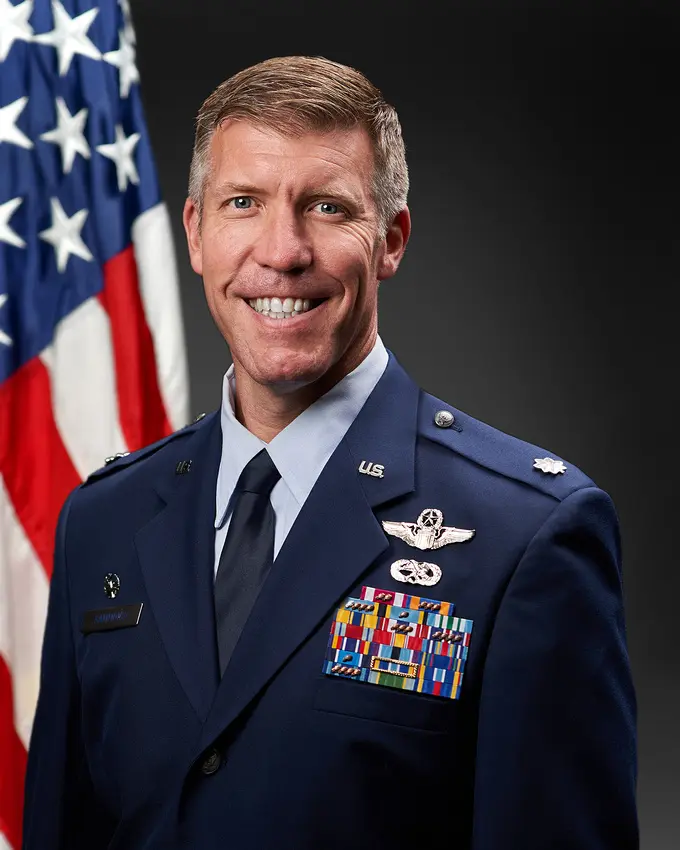 Nick's path into autonomous systems didn't start in a boardroom or a university lab. It started in 2009, when he joined Air Force Special Operations Command as an MQ-1 Predator pilot as the platform was becoming central to counter-terror operations worldwide.
"We were forged into a fast-paced rhythm of trying to solve tactical problems of the warfighter," Nick says. "It was unpaved ground — and it was exciting."
Over the next fourteen years, Nick accumulated more than 3,100 hours of unmanned BVLOS flight time in ISR and strike missions across some of the world's most complex and contested airspace. He rose to Squadron Commander, served as an MQ-9 Instructor/Evaluator Pilot, and functioned as Chief Pilot overseeing more than 50 pilots. Along the way, he earned a Master's in Aeronautical Science from Embry-Riddle, a BS in Aeronautical Engineering from the Air Force Academy, and his Airline Transport Pilot certificate — eventually flying the Boeing 737 and 777 for United Airlines.
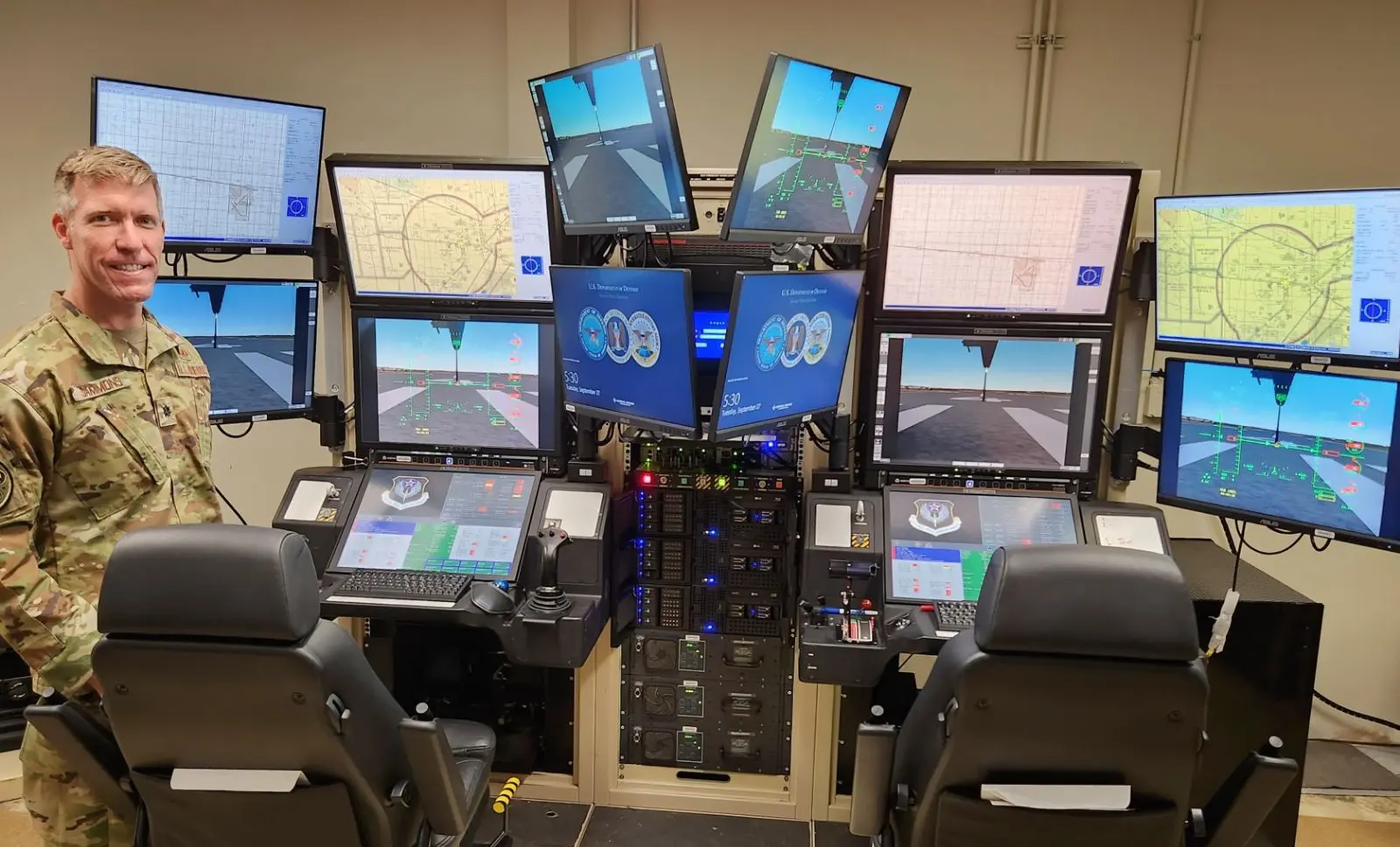
That combination — combat RPA operator, airline pilot, aeronautical engineer — is rare in any industry. At Horizon Aerobotics, it's foundational.
The Lesson That Matters Most
Ask Nick what years of combat drone operations taught him, and his answer is immediate: safety.
"When we were operating in a stack of air assets over a target with a mix of gunships and fast movers, safety had to be at the forefront," he says. "It's risky, but that doesn't mean you can't do it. You just have to minimize the risk with the tools and training you have available."
That same discipline translates directly to commercial drone operations. As an ATP-rated airline pilot, Nick understands the National Airspace System from the cockpit perspective in a way few drone operators ever will. He's been responsible for hundreds of passengers at 35,000 feet, and on short-final below 400 feet where commercial drones also operate. That experience shapes everything about how Horizon Aerobotics approaches safety, integration, and operational standards.
"You identify the risk," Nick says, "and reduce it where you can."
Skating to Where the Puck is Going
Denver Hopkins, Horizon Aerobotics CEO and co-founder, doesn't hesitate when asked why Nick is essential to building the company:
"Nick brings a rare combination — genuine engineering intellect and thousands of hours of real-world autonomous systems operations in some of the most demanding environments on the planet. But what I couldn't build this company without is his leadership under pressure. He executes in a calm, disciplined OODA Loop [Observe, Orient, Decide, Act] — and reliably gets to the Act. In a startup, that's everything."
Nick sees clear parallels between the early days of military drone operations and where the commercial drone industry stands today— when software gaps, acquisition lag, and evolving doctrine created constant pressure to adapt.
"In 2009, we saw significant gaps in the human-machine interface in the Predator. There were band-aid approaches on software and hardware while demand for changes far outpaced the acquisition cycle," he says. "The same themes exist on the commercial side— FAA approval, BVLOS at scale, tech maturation, appropriate training. These are the big hills to climb as a community."
His approach: skate to where the puck is going.
Building the Vision at KJST
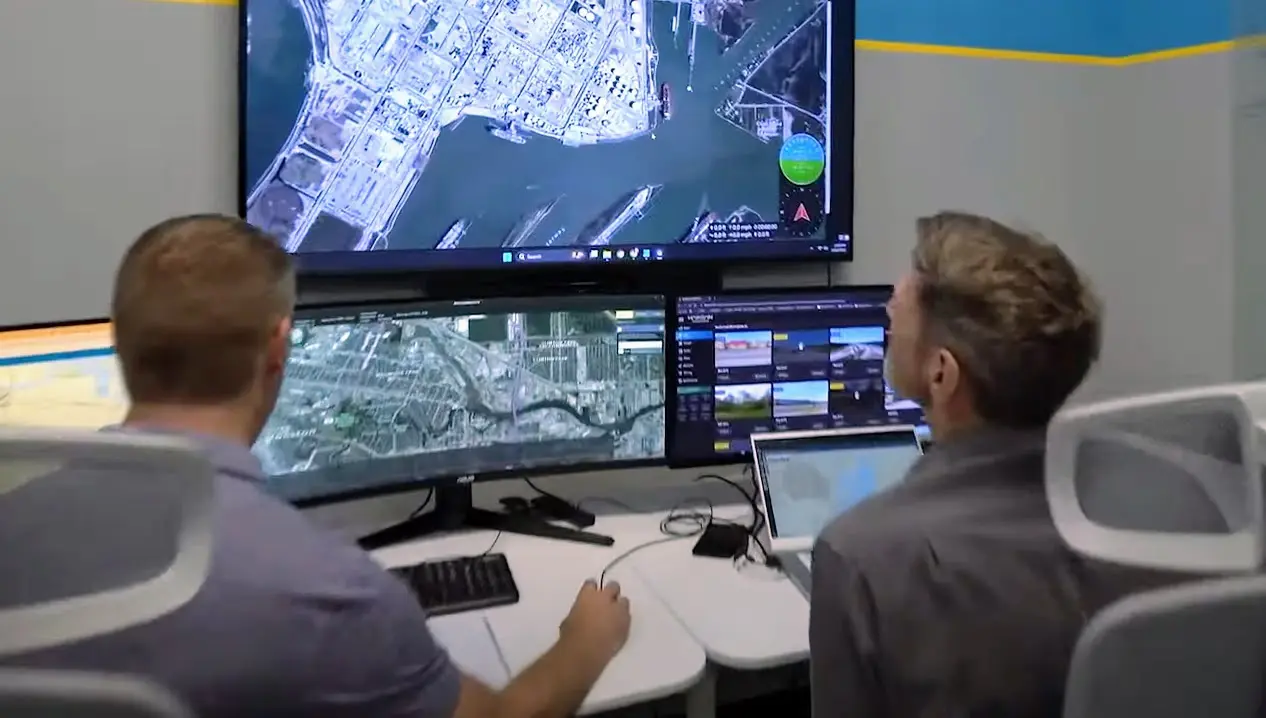
For Nick, the establishment of Horizon Aerobotics' national Remote Operations Center at the Innovation Hub at John Murtha Johnstown-Cambria County Airport (KJST) represents something personal — the materialization of a vision years in the making.
"It's wonderful to see the vision we've had for years beginning to materialize in practical ways," he says. "I enjoy the excitement I see in others when they have their 'aha' moment and realize what we're creating, and what it means for commercial operations."
His goal for customers is straightforward: "We want to solve for yes and help them solve their most difficult problems."
Character Beyond the Cockpit
Beyond the credentials, the flight hours, and the operational depth, Nick's colleagues will tell you something else about him: he's the person in the room who reads people clearly, de-escalates naturally, and leads with respect.
Denver puts it this way:
"Nick has a natural ability to read the subtle human dynamics in a room and suggest productive paths forward through challenging situations. I actively seek his counsel in those areas. It makes us a better team."
Nick traces that back to a career built on developing people — mentoring and evaluating pilots under his command, leading enlisted personnel in units of over 100, and outside the cockpit, investing years in foster youth, Boy Scouts, and church youth groups. It's a thread that runs through everything he does, and a simple belief he carries into every professional environment.
"How you carry yourself and how you treat others matters," he says. "I try my best to take that attitude with me into the company."
What Success Looks Like
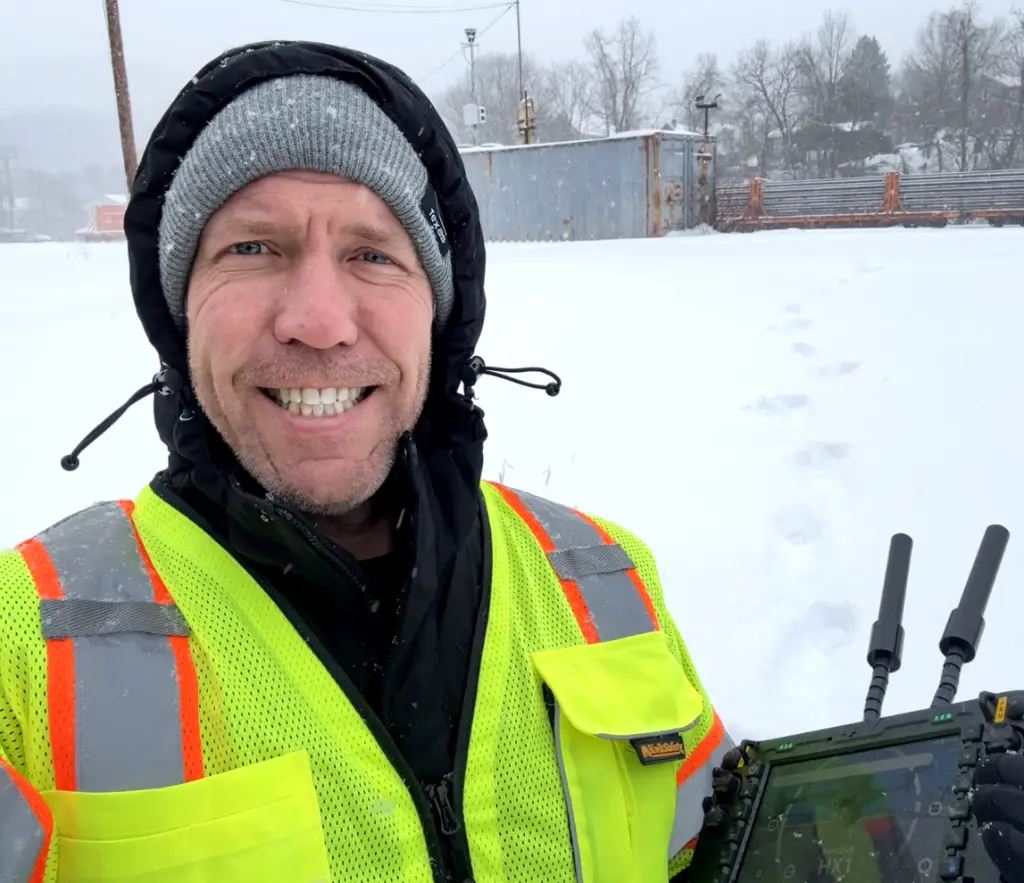
Ask Nick what success looks like three to five years from now, and his answer reflects exactly who he is.
"I believe we're succeeding now. What I think winning looks like in the near future is for our vision of scalable BVLOS aerial intelligence to be fully integrated into the NAS — and for our customers to be gaining incredible value. Both in saved dollars and saved lives."
That's the mission. And we're fortunate to have Nick Sammons leading flight operations to get us there.
Horizon Aerobotics is building the infrastructure and operations for autonomous aerial intelligence at scale. Learn more at www.horizonaerobotics.com.